
Real-Time Construction Reporting & Site Monitoring Solutions

Remote Monitoring Capability Statement
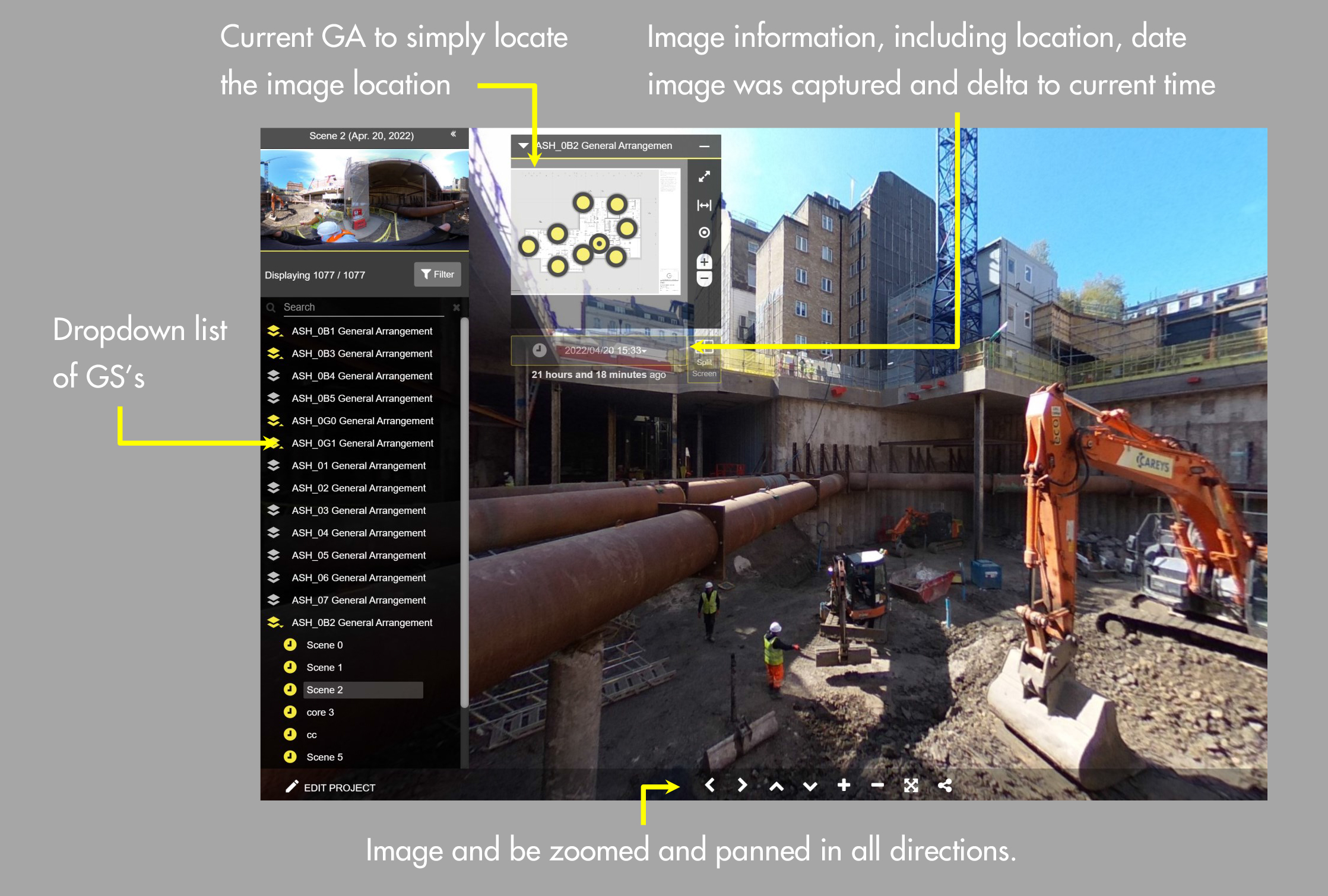
The HoloBuilder platform is built around three powerful workflows: Capture, View and Control progress—all tied together with a powerful Enterprise Dashboard for secure and compliant data management
Progress Capture
Capture your jobsite in the world’s most efficient and effective way possible. HoloBuilder’s JobWalk app guides the process to effortlessly capture 360° and 2D photos, automatically organized by project, floor plan and date/time.
Progress View
See your jobsite in 360° from anywhere, anytime. Photos become available instantly. Rest assured that your project is fully documented and recorded for photographic proof of progress—whenever and wherever you need it.
Progress Control
Easily compare 360° photos side-by-side with your BIM models, historical photos and project schedules to make sure project progress is going as planned. Mark-up, annotate and tag photos to coordinate tasks around a single source of truth—keeping all teams in sync and projects moving forward.
Track Progress
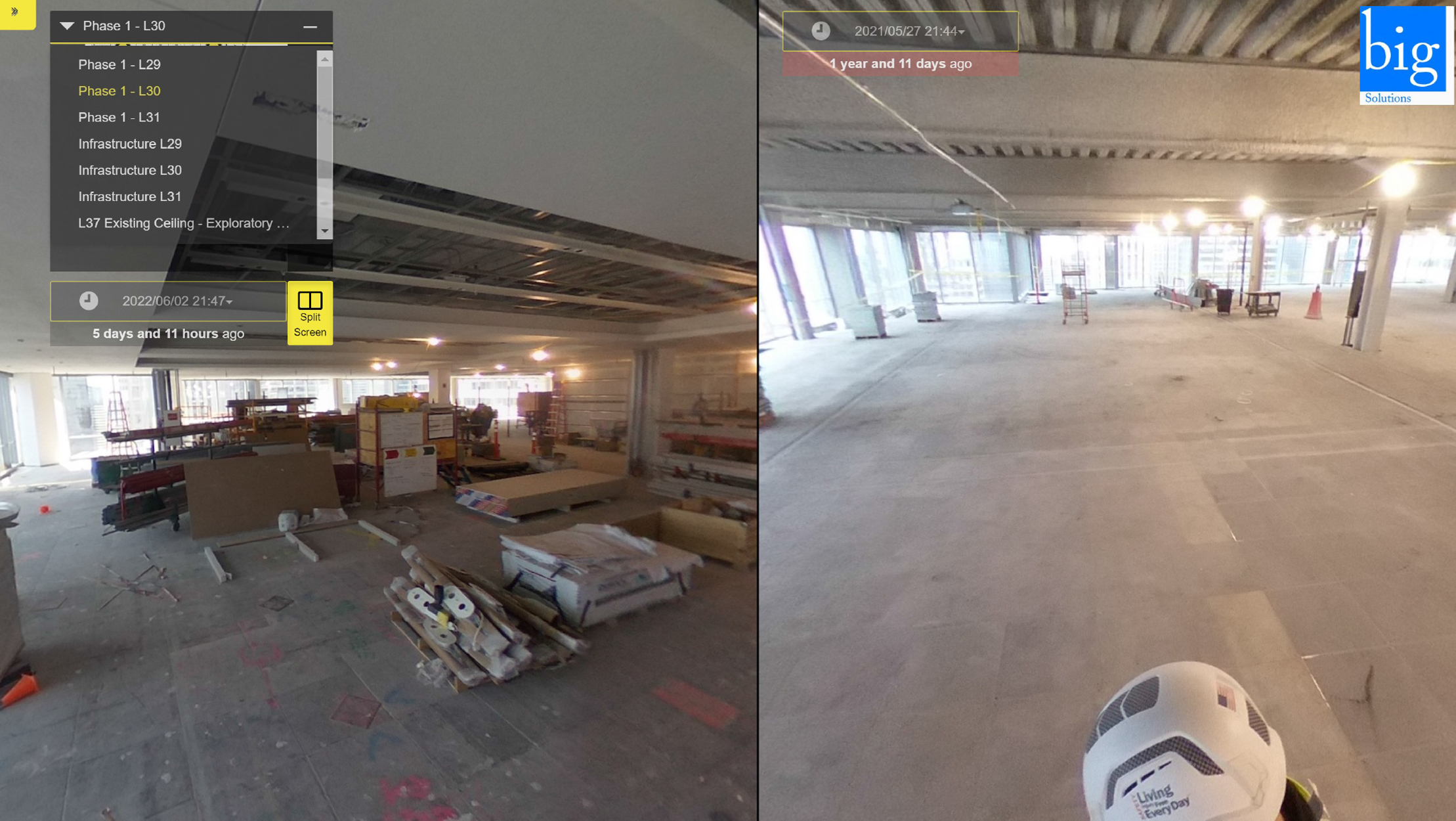
Capture the same location over time to create a version history of that location using HoloBuilder TimeTravel. Combine this with HoloBuilder SplitScreen to compare the past and present of the same location side-by-side.
Enterprise Compliance
HoloBuilder is built with end-to-end encryption and the highest security measures in mind. HoloBuilder’s 7-tier user management hierarchy allows Enterprise Admins to give data access only on a “need to know” basis, remaining secure and compliant.
Transform Construction Oversight with Real-Time Project Intelligence
Modern construction projects generate vast amounts of data every day. From site activities and contractor performance to schedule updates and progress reporting, project teams require accurate information to make informed decisions.
Traditional reporting methods often create delays between field activities and management visibility. By the time reports reach decision-makers, critical issues may have already impacted project schedules, budgets, or resource allocation.
Real-time construction reporting changes this dynamic by providing immediate access to project information, enabling stakeholders to monitor progress, identify risks, and respond quickly to changing site conditions.
At Big Solutions, our remote monitoring and reporting solutions help project owners, contractors, developers, and infrastructure organizations gain complete visibility into project performance through digital reporting, visual monitoring, and advanced analytics.
What Is Real-Time Construction Reporting?
Real-time construction reporting is the process of collecting, analyzing, and presenting project information as activities occur on-site.
Instead of waiting for weekly or monthly updates, stakeholders can access current project data through digital dashboards, visual reports, and automated monitoring systems.
This approach enables teams to:
- Track project progress continuously
- Monitor site activities remotely
- Identify delays before they become critical
- Improve communication between stakeholders
- Enhance project transparency
- Support data-driven decision-making
Real-time reporting creates a connected project environment where information flows efficiently across all levels of the organization.
Why Construction Projects Need Real-Time Site Reporting Tools
Construction projects involve multiple stakeholders, including project managers, contractors, consultants, asset owners, and government agencies.
Without reliable reporting systems, organizations face challenges such as:
Delayed Decision-Making
Manual reporting processes often result in outdated information reaching project leaders.
Limited Site Visibility
Remote stakeholders may struggle to understand actual site conditions without visual reporting tools.
Inconsistent Data Collection
Different teams may collect information using different formats, leading to reporting inconsistencies.
Increased Project Risk
Potential issues can go unnoticed until they significantly impact schedules and budgets.
Inefficient Communication
Lack of centralized reporting creates communication gaps between project participants.
Real-time construction site reporting platforms address these challenges by creating a single source of truth for project performance information.
Benefits of Real-Time Construction Site Reporting Platforms
Enhanced Project Visibility
Real-time reporting platforms provide instant access to project performance data.
Stakeholders can view:
- Progress updates
- Site conditions
- Resource utilization
- Schedule performance
- Safety observations
- Quality assurance metrics
This visibility supports proactive project management and improved accountability.
Faster Issue Identification
When project information is available immediately, teams can detect and address issues before they escalate.
Examples include:
- Schedule delays
- Resource shortages
- Productivity challenges
- Site access constraints
- Safety concerns
Early intervention reduces the likelihood of costly project disruptions.
Improved Stakeholder Communication
Digital reporting platforms enable consistent communication among project participants.
Automated reports and dashboards ensure everyone works from the same information, reducing misunderstandings and improving collaboration.
Better Risk Management
Construction risks can significantly impact project outcomes.
Real-time monitoring helps organizations:
- Identify emerging risks
- Track mitigation measures
- Monitor performance indicators
- Improve project forecasting
As a result, project teams can make informed decisions with greater confidence.
Construction Progress Tracking Software: A Critical Project Management Tool
Construction progress tracking software plays a vital role in modern project delivery.
These platforms help organizations monitor:
Schedule Performance
Track planned versus actual progress and identify potential delays.
Workforce Productivity
Measure labor performance and resource utilization.
Site Activities
Monitor ongoing work packages and construction milestones.
Equipment Usage
Track asset deployment and operational efficiency.
Budget Performance
Assess project costs relative to completed work.
When integrated into a comprehensive reporting strategy, construction progress tracking software provides valuable insights that improve project delivery outcomes.
Visual Construction Progress Tracking
Visual reporting has become one of the most effective methods for communicating project performance.
Construction stakeholders often need more than spreadsheets and written reports to understand project conditions.
Visual construction progress tracking includes:
- Time-lapse photography
- Site imagery
- Drone inspections
- Progress videos
- Interactive dashboards
- Visual comparison reporting
These tools provide clear evidence of project progress while improving stakeholder engagement and transparency.
Project Progress Monitoring in Construction
Effective project progress monitoring is essential for delivering projects on schedule and within budget. Construction managers must continuously assess whether work activities align with planned objectives.
A comprehensive project progress monitoring strategy includes:
Milestone Tracking
Construction milestones provide measurable indicators of project advancement. Monitoring milestone completion helps stakeholders understand overall project health and identify potential delays.
Productivity Analysis
Measuring workforce productivity enables project teams to evaluate operational efficiency and improve resource allocation.
Resource Performance Monitoring
Tracking labor, equipment, and material utilization helps organizations optimize performance while reducing waste.
Quality Assurance Monitoring
Construction quality directly impacts project success. Real-time monitoring helps ensure compliance with project specifications and quality standards.
Schedule Compliance Reporting
Digital reporting systems compare planned schedules against actual performance, helping teams identify and address schedule deviations quickly.
How to Track Construction Progress Digitally
Organizations seeking greater efficiency increasingly adopt digital tools to track construction progress.
The process typically involves several key components.
Digital Data Collection
Project information is collected through:
- Mobile field applications
- Site inspections
- Drone surveys
- Camera systems
- Sensor technology
- GPS-enabled equipment monitoring
Automated Reporting
Collected data is automatically processed and transformed into actionable reports.
Automation eliminates manual reporting delays while improving data accuracy.
Dashboard Visualization
Interactive dashboards enable stakeholders to monitor:
- Project status
- Schedule performance
- Resource allocation
- Site productivity
- Risk indicators
- Completion percentages
Historical Trend Analysis
Digital platforms maintain historical project records, enabling performance benchmarking and forecasting.
By combining these capabilities, organizations gain a more accurate understanding of project performance throughout the construction lifecycle.
Real-Time Data Analytics for Construction Projects
Data analytics is transforming how construction organizations manage projects.
Traditional reporting focuses on what happened in the past. Modern analytics platforms help organizations understand:
- What is happening now
- Why it is happening
- What is likely to happen next
- Which actions should be taken
This shift from reactive management to proactive decision-making improves project outcomes significantly.
Key Analytics Applications
Performance Measurement
Analytics tools evaluate project performance against defined KPIs.
Resource Optimization
Data-driven insights help maximize workforce and equipment productivity.
Schedule Forecasting
Advanced analytics identify trends that may impact future project timelines.
Risk Prediction
Predictive models help organizations anticipate potential project challenges before they become significant problems.
Construction Reporting KPIs That Matter
Effective reporting focuses on metrics that support strategic decision-making.
Important construction KPIs include:
Schedule Performance Index (SPI)
Measures progress relative to planned schedules.
Cost Performance Index (CPI)
Evaluates project spending efficiency.
Productivity Metrics
Assesses labor and equipment effectiveness.
Safety Performance Indicators
Monitors incidents, observations, and corrective actions.
Quality Metrics
Tracks defects, rework requirements, and compliance performance.
Resource Utilization Rates
Measures efficiency in deploying personnel and assets.
By continuously monitoring these indicators, project teams gain deeper visibility into operational performance.
The Role of Visual Reporting in Construction Monitoring
Visual reporting has become increasingly important in large infrastructure and construction projects.
Visual evidence often communicates project conditions more effectively than written reports.
Benefits include:
Improved Transparency
Stakeholders can visually verify progress and site conditions.
Faster Communication
Images and visual dashboards communicate information quickly.
Better Documentation
Visual records create a detailed historical archive of project development.
Increased Stakeholder Confidence
Clear visual reporting supports accountability and trust among project participants.
For project owners and investors, visual progress tracking provides reassurance that work is progressing according to expectations.
Digital Transformation in Construction Reporting
The construction industry is rapidly embracing digital transformation.
Organizations that adopt modern reporting technologies gain significant advantages over competitors relying on traditional methods.
Digital transformation enables:
- Faster information sharing
- Improved project visibility
- Better risk management
- Enhanced operational efficiency
- Increased stakeholder engagement
- Stronger project governance
As projects become larger and more complex, digital reporting solutions will continue to play a critical role in successful project delivery.
Why Choose Big Solutions for Construction Monitoring?
Big Solutions helps organizations improve project oversight through innovative monitoring and reporting technologies.
Our solutions are designed to provide:
Accurate Project Intelligence
Gain access to reliable data that supports informed decision-making.
Real-Time Visibility
Monitor project activities as they happen.
Enhanced Stakeholder Communication
Provide consistent reporting across all project participants.
Scalable Solutions
Support projects ranging from local developments to major infrastructure programs.
Actionable Insights
Transform raw project data into meaningful business intelligence.
By combining advanced technology, visual reporting, and analytics-driven methodologies, Big Solutions helps organizations achieve better project outcomes while reducing risk and improving efficiency.
Frequently Asked Questions
Real-time construction reporting provides immediate access to project information, enabling stakeholders to monitor progress, identify issues, and make informed decisions without waiting for traditional reporting cycles.
These tools improve visibility, enhance communication, reduce reporting delays, and help project teams identify risks before they affect schedules or budgets.
Construction progress tracking software helps organizations monitor project performance, schedule compliance, workforce productivity, and resource utilization through digital reporting systems.
Visual tracking uses photographs, drone imagery, videos, and dashboards to document project activities and communicate progress effectively.
Digital monitoring improves reporting accuracy, enhances stakeholder collaboration, supports risk management, and enables data-driven decision-making.
Organizations can use mobile applications, drones, cameras, sensors, dashboards, and analytics platforms to collect and analyze project data in real time.
Infrastructure, transportation, utilities, energy, commercial development, mining, and government projects all benefit from enhanced project visibility and reporting.
Yes. Remote monitoring enables early issue detection, proactive intervention, and improved risk management throughout the project lifecycle.
Construction success depends on timely information, effective communication, and informed decision-making. Big Solutions delivers real-time construction reporting and monitoring solutions that help organizations improve project visibility, strengthen stakeholder engagement, and drive better project outcomes. Contact our team today to learn how digital reporting, visual monitoring, and data-driven insights can transform your construction project delivery process.